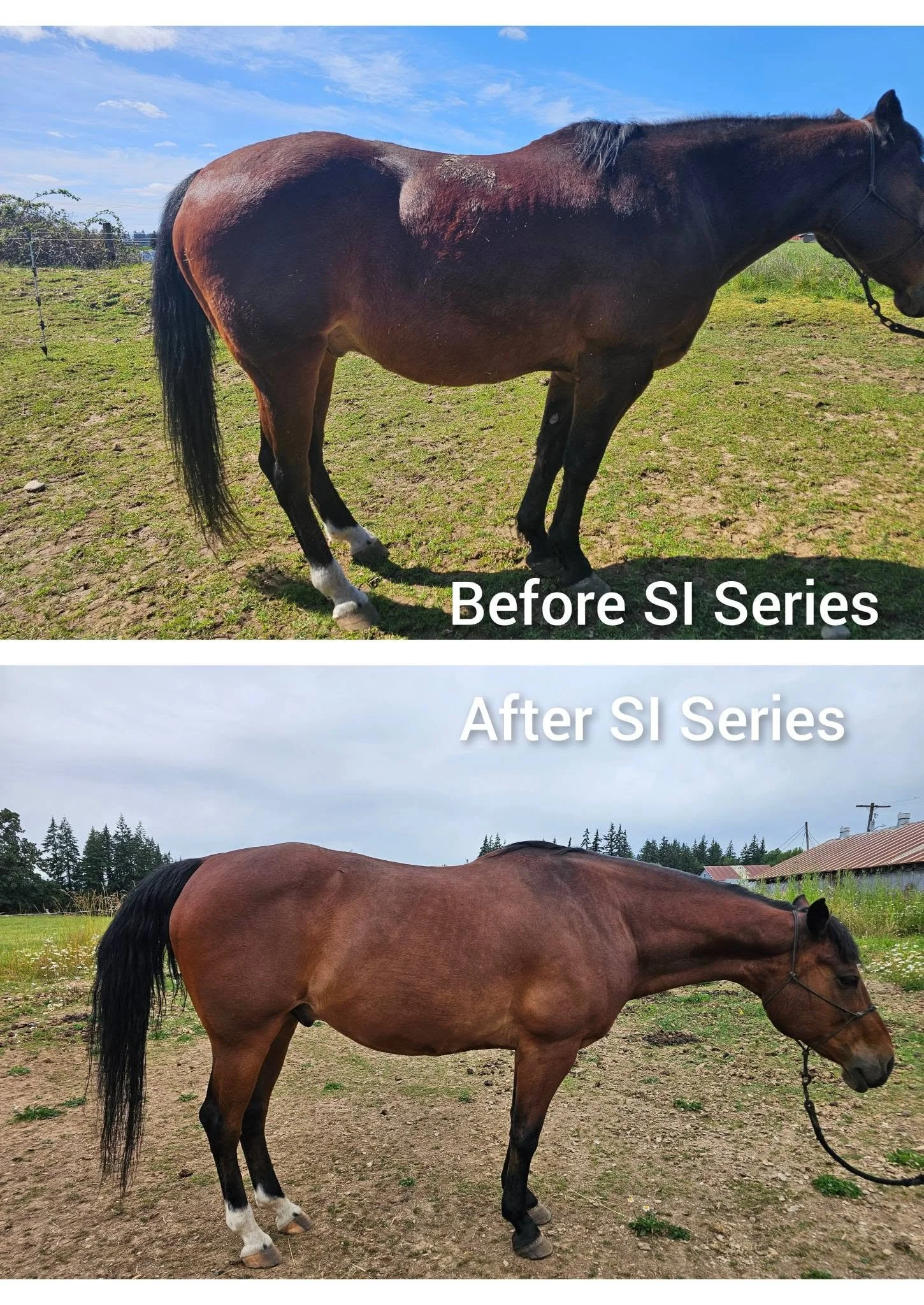
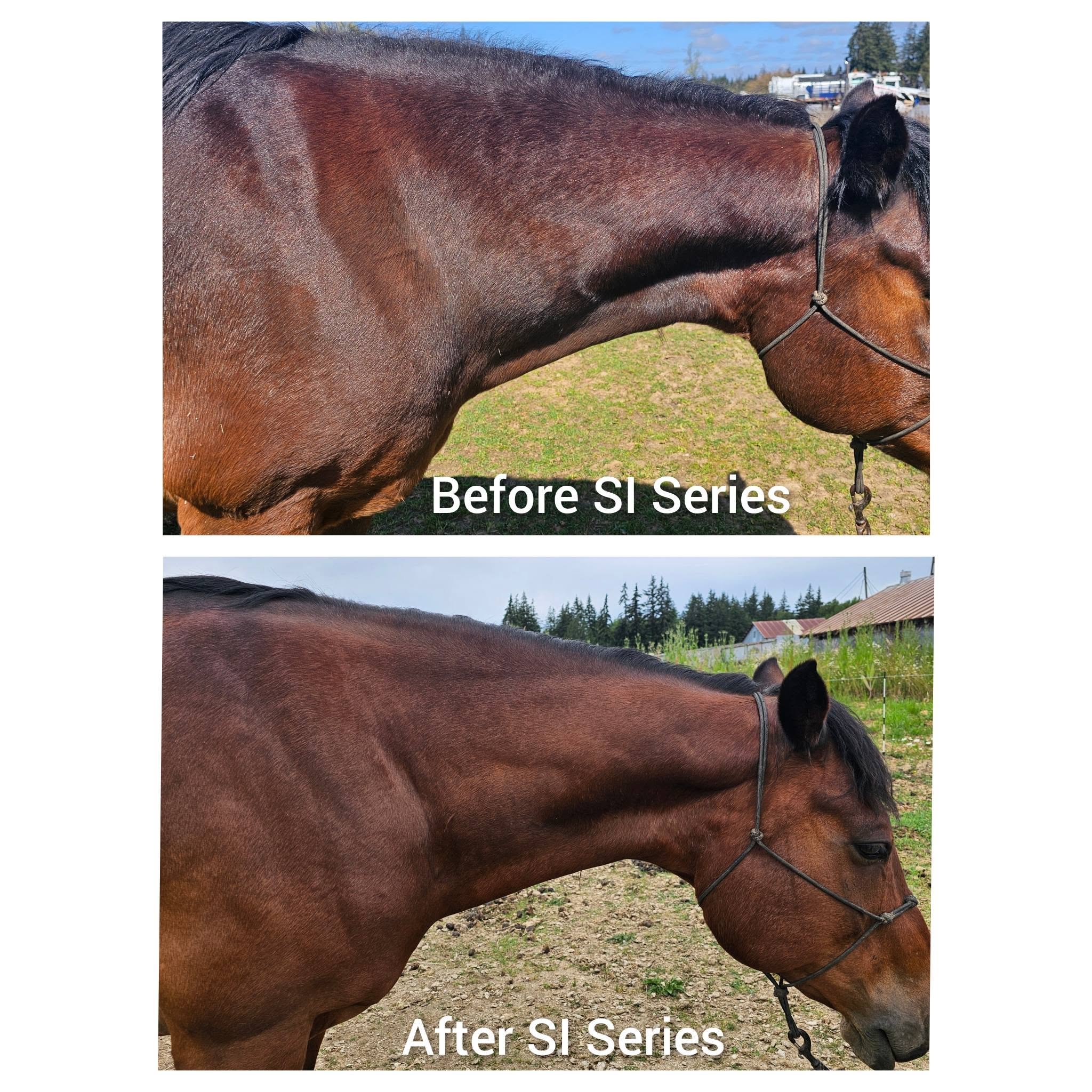
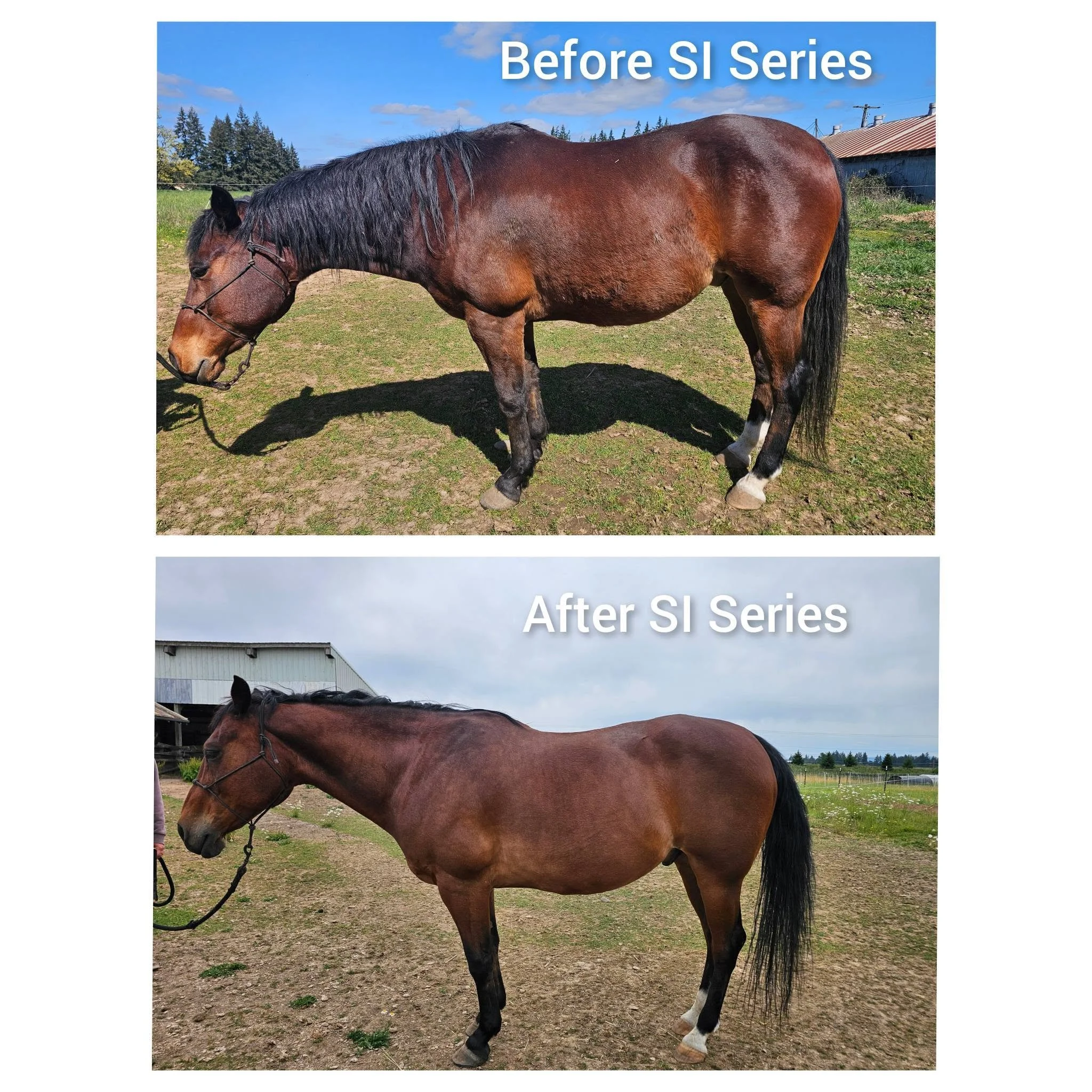
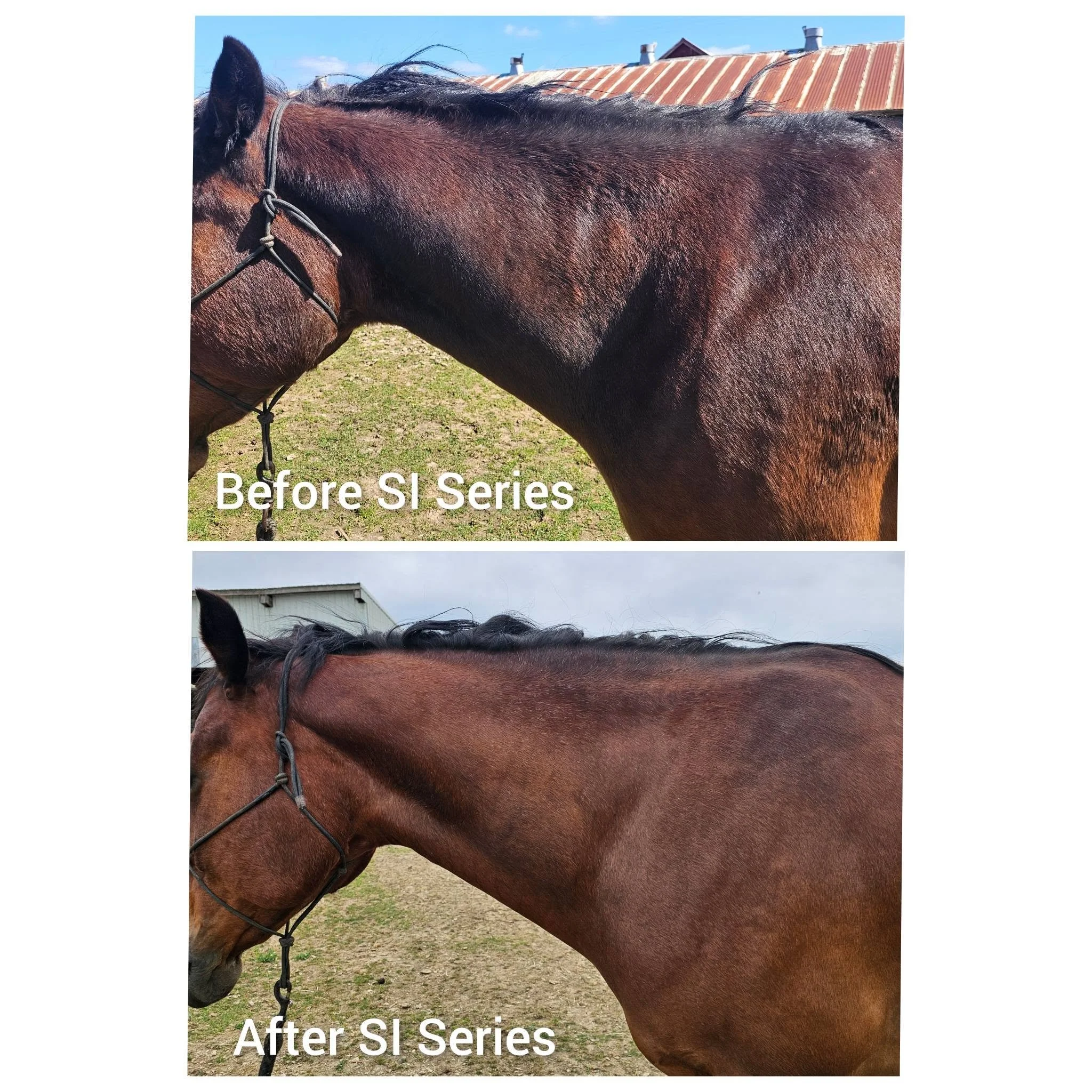
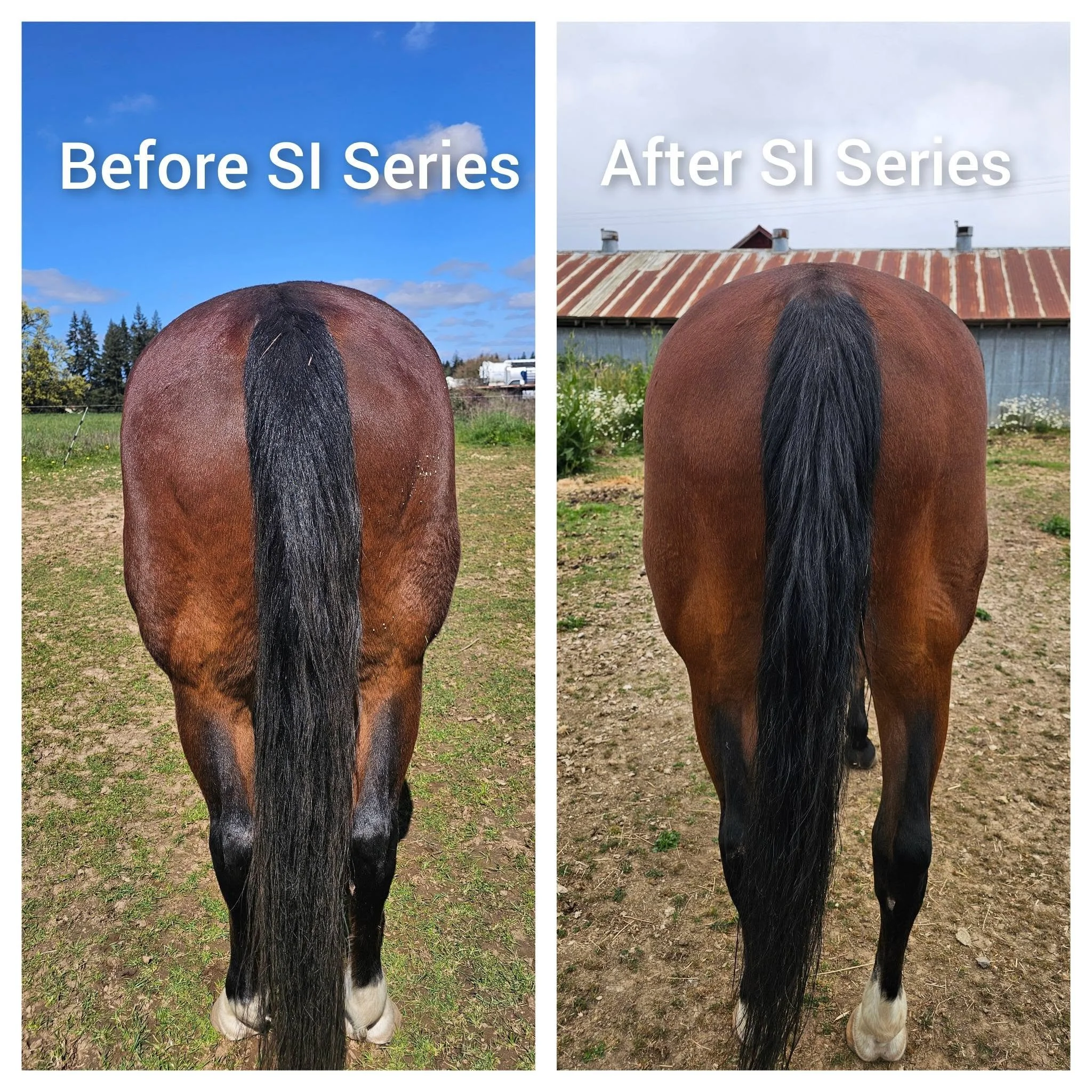
This horse came into his Structural Integration (SI) series with a noticeably camped-under posture, particularly through the hindquarters. In the before photos, his hind limbs are positioned farther underneath his body than we would ideally like to see in a relaxed, balanced stance. A horse may adopt this type of posture as a way of unloading an area, accommodating restriction, or managing tension and compensation. When the hind limbs remain consistently underneath the body, it can affect how the horse distributes weight and uses the pelvis, hindquarters, topline, and front end.
Throughout his SI series, we focused on working with the fascial system as a whole and addressing areas of restriction and compensation. In the after photos, his hind legs are able to stand in a more natural position beneath him, with a more balanced relationship between the hindquarters, topline, shoulders, and neck. His overall posture appears more open and connected, with improved symmetry and a more even distribution of his body.
Seeing a horse move away from a consistently camped-under posture can be an encouraging change because it suggests the body is finding more freedom and balance in how it positions itself. Structural Integration is not about forcing a horse into a particular posture, but about creating the opportunity for the body to release restrictions and find a more functional way of carrying and using itself. These photos capture this horse’s individual progress throughout his SI series.